Nambix

Blogs

ai transcription
Blogs

How AI Transcription Is Transforming Business Meetings and Interviews in 2026

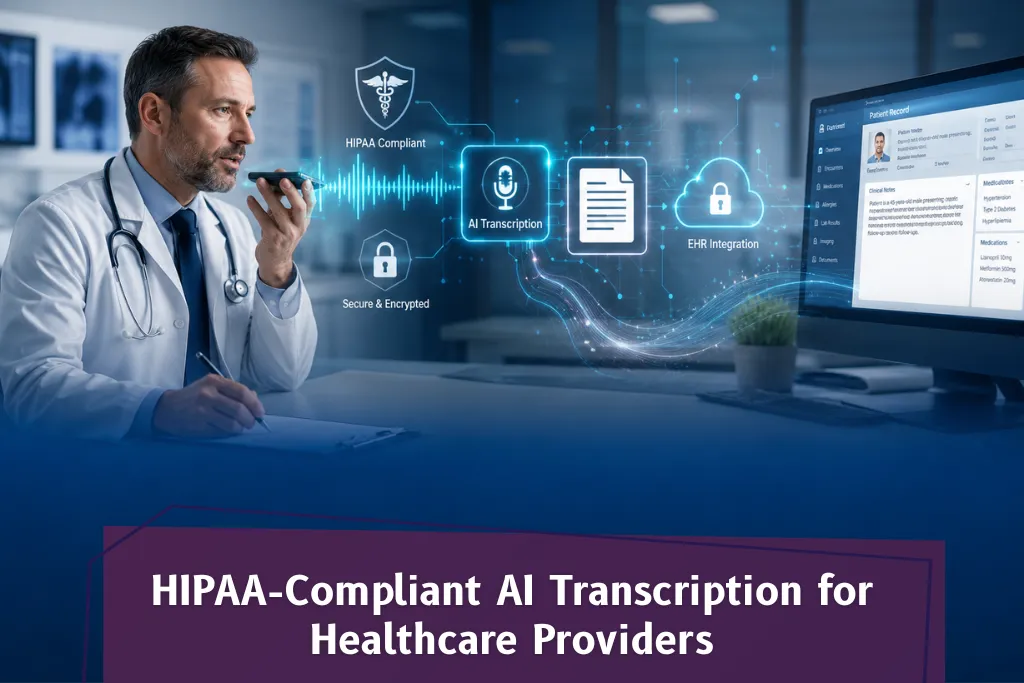
AI meeting transcription is the use of artificial intelligence to automatically convert spoken conversations from business meetings, video calls, and interviews into structured, searchable text — delivering real-time meeting notes, speaker labels, ai summaries, and ai transcripts that teams can act on immediately. In 2026, ai meeting transcription has become a core business tool rather than a nice-to-have feature. Whether your team collaborates on Microsoft Teams, Google Meet, or any other meeting platform, ai transcription tools now offer highly accurate transcripts, automated meeting recaps, and ai powered search capabilities that help every meeting participant stay on the same page, close follow ups faster, and extract key insights — all without manual note taking. Why Every Business Needs an AI Meeting Assistant in 2026 The average professional spends more than 20 hours a week in meetings. Without a reliable meeting assistant, critical details, action items, and key takeaways are routinely lost. Manual transcription is slow, expensive, and inconsistent — especially when dealing with different accents, overlapping dialogue, or multiple speakers on an international video call. This is where an ai meeting assistant steps in. Modern meeting transcription software goes far beyond converting audio files to text. It identifies speakers, creates meeting summaries, flags key moments, and enables teams to search across hundreds of meeting recordings in seconds. For sales teams, HR professionals, and project managers, this represents a fundamental shift in how work gets documented and shared. How AI Transcription Works: From Audio Files to Actionable Insights When you record meetings on platforms like Google Meet or Microsoft Teams, the meeting transcription app captures the audio files or video files and runs them through advanced speech recognition models. The ai transcription engine applies speaker identification to separate speakers, assigns speaker labels, and produces clean, time-stamped meeting transcripts. Some meeting transcription tools can also process pre-recorded recorded audio submitted as uploads — no live call required. Once the transcript is generated, the ai meeting agent produces ai generated meeting notes, highlights key points, and creates a meeting summary automatically. The result is a structured, searchable document that any meeting participant can reference, share, or build on for future meetings. Smarter Meeting Notes: AI Notes and AI Summaries One of the biggest advantages of ai meeting transcription is the elimination of manual note taking. Rather than splitting attention between listening and writing, teams can rely on the ai assistant to capture every word and generate ai notes automatically. These ai generated summaries distill lengthy discussions into concise meeting recaps, surfacing action items, follow ups, and key takeaways in seconds. Sales teams benefit especially from automated summaries that capture client needs and next steps without any post-call effort. The ai tool also makes it easy to create summaries per department or topic, turning raw meeting transcription data into structured, shareable intelligence. AI Powered Search: Never Miss Key Moments As meeting recordings accumulate over months, finding a specific decision or conversation can feel overwhelming. AI powered search solves this entirely. By indexing all your ai transcripts, meeting transcription software lets you search for keywords, topics, or speaker names across your entire archive of recordings. Need to recall what a client said in a discovery call three months ago? Want to find the key moments when a product decision was made? With ai powered search, those answers surface in seconds. This transforms passive meeting recordings into active knowledge bases — making every future meeting more informed, every follow up more targeted, and every relevant detail permanently accessible. Handling Different Accents and Multiple Languages One of the persistent challenges in transcription has been maintaining transcription accuracy across different accents. A sales team spread across Mumbai, London, and New York brings a wide range of speech patterns to the same video call. Modern ai transcription models are trained on diverse, multilingual datasets, making them far more capable at handling different accents than earlier tools. Multi language support allows teams to transcribe audio files and video files in multiple languages, making ai meeting transcription genuinely useful for global businesses. Whether you need meeting transcription in English, Hindi, Spanish, or French, today’s meeting transcription software is built for international teams — with transcription quality that holds up across accents, environments, and speakers. AI Transcripts for Interviews: Transforming HR and Sales Interview transcription has historically depended on human transcription services — slow, costly, and hard to scale. AI transcription changes that entirely. HR professionals can now automatically transcribe interviews, extract key insights, and maintain private meeting notes for sensitive discussions within the same ai meeting transcription platform. For sales teams, every discovery call, demo, and negotiation can be transcribed, summarized, and analyzed. Meeting bots can join calls directly, record meetings, and generate ai summaries without any post-call manual effort. The result is better coaching, more accurate meeting recaps, and a sharper understanding of what resonates with prospects — all powered by ai transcription at scale. The Future of Business Communication Runs on AI Transcription The shift toward ai meeting transcription is not a passing trend — it is the new standard for how businesses document, share, and act on conversations. From automating meeting notes to enabling ai powered search across years of recorded audio, meeting transcription tools are helping teams work faster, smarter, and more collaboratively — with every key insight, key moment, and follow up captured automatically. As a trusted provider of AI language services, Nambix Technologies delivers accurate, scalable ai transcription built for the demands of modern business. Whether you need to transcribe audio from interviews, board meetings, sales calls, or large-scale video calls across different accents and multiple languages, our platform is ready. Visit https://nambix.com/ to explore how our meeting transcription services can transform the way your team communicates, collaborates, and grows. Frequently Asked Questions About AI Meeting Transcription 1. What is AI meeting transcription, and how accurate is it? AI meeting transcription uses speech recognition and natural language processing to automatically convert spoken conversations into text. Core ai features include speaker identification, speaker labels, and ai generated summaries. In 2026, leading

MTPE
Blogs

What is MTPE? A Complete Guide to Machine Translation Post-Editing in 2026

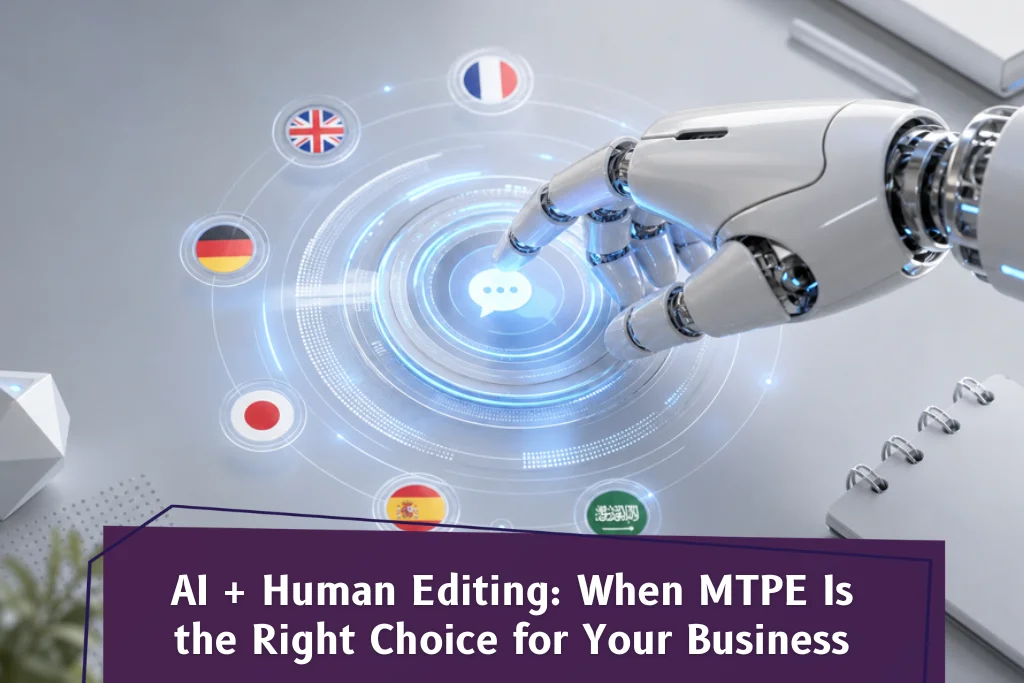
MTPE — or machine translation post-editing — is a hybrid translation workflow in which a professional linguist reviews and refines raw machine translation output to produce accurate, publication-ready content. In 2026, machine translation post-editing has become the default approach for businesses that need to translate large volumes of content across multiple languages quickly, affordably, and without sacrificing translation quality. This complete guide covers everything you need to know about MTPE: how the post-editing process works, the difference between light post editing and full post editing, when it outperforms traditional human translation or standalone AI translation, and how to choose the right post editing services for your needs. What is Machine Translation Post-Editing (MTPE)? Machine Translation Post-Editing (MTPE) is the process of having human editors correct and refine the machine generated translation produced by a machine translation engine. Unlike pure human translation — where a professional translator works from scratch — or fully automated AI translation — which delivers machine translated text with no human review — MTPE pairs the speed of machine translation systems with the accuracy and nuance that only human expertise can provide. Even the most advanced neural machine translation engines can produce machine translated content that contains translation errors: spelling mistakes, grammatical errors, formatting inconsistencies, inconsistent terminology, and idiomatic expressions that fall flat in the target language. Post editing aims to catch and correct all of these issues before the content reaches the intended audience, turning raw machine translation output into polished, professional translated text. A post editor — also referred to as a professional linguist — reviews the machine translated output line by line, corrects errors, adjusts tone and register, and ensures that key terms are translated consistently throughout. The result: high quality translations delivered at a fraction of the time and cost of traditional translation. Light Post Editing vs. Full Post Editing The post-editing process is not one-size-fits-all. There are two widely recognised levels, and choosing the right one depends on your content type, intended audience, and quality expectations. Light Post Editing Light post editing — sometimes called light post or minimal intervention editing — focuses on making the machine translated text functionally accurate. Human post editing at this level corrects obvious translation errors: grammatically incorrect sentences, spelling mistakes, and passages where the intended meaning has been lost. Style refinement and tone polishing are out of scope. Light post editing is best suited for internal documents, quick-reference content, or large-volume material where the goal is comprehension rather than publication quality. Full Post Editing Full post editing is a comprehensive revision by human translators or human linguists. Beyond fixing grammatical errors and spelling mistakes, full post editing addresses stylistic flow, cultural nuances, inconsistent terminology, and brand voice alignment. The translated output is refined until it reads as naturally as content written natively in the target language. Full post editing is the right choice for customer-facing content, marketing materials, legal documents, and any translated content that directly represents your brand. How the Post-Editing Process Works A typical translation post editing MTPE workflow follows these stages: Content is submitted and run through a machine translation engine — which may be a neural machine translation system, a large language models-based AI translation tool, or a translation memory-integrated platform. The machine generated translation is delivered to a professional post editor, who reviews the machine translated output for accuracy, fluency, and consistency. The post editor corrects errors — from minor spelling mistakes and formatting inconsistencies to deeper issues like cultural nuances and idiomatic expressions that the translation engine could not handle. In a full post editing workflow, the human input also ensures that key terms are translated consistently and that the final translations match the expectations of the intended audience. The translated text goes through final quality checks before delivery, confirming the translated output meets the agreed standard. This automated process combined with structured human review dramatically improves overall translation efficiency compared to purely manual approaches, especially at scale. MTPE vs. Human Translation vs. AI Translation Each approach serves different needs in the translation process: Human translation: Best for high-stakes content requiring deep cultural judgement — legal documents, literary works, and creative campaigns. Human translators bring a depth of context and craft no machine translation tool can fully replicate. AI translation: Fully automated machine translation is ideal for large volumes of low-stakes material — internal documents, data exports, and draft content — where speed takes priority over polished translation quality. MTPE: The sweet spot for most professional translation needs. Machine translation systems handle the volume and speed; human post editing corrects errors, resolves inconsistent terminology, and lifts the quality of the translated content to a professional standard. For businesses translating content across multiple language pairs at scale, post editing machine translation delivers the best balance of speed, cost, and translation quality. Key Benefits of Machine Translation Post-Editing Speed: A machine translation engine processes high volumes of content in minutes. Human post editing then refines — not recreates — that output, drastically cutting overall turnaround time. Cost efficiency: Because the translation engine handles the initial draft, MTPE costs significantly less than traditional human translation for equivalent volumes. Consistency: Translation memory and glossary tools ensure key terms are translated consistently across all documents and language pairs. Quality control: Human editors catch translation errors, grammatically incorrect phrasing, and formatting inconsistencies that machine translated content routinely contains. Scalability: MTPE scales effortlessly whether you need to handle two language pairs or twenty, with no compromise to translation quality. Conclusion MTPE — or machine translation post-editing — represents the most practical and efficient path to high quality translations at scale in 2026. By combining the speed and capacity of machine translation with the accuracy of human post editing, businesses can deliver polished, consistent, and culturally appropriate translated content across multiple languages faster and more cost-effectively than traditional translation allows. Whether you need light post editing for internal documents or full post editing for customer-facing content, MTPE offers the right balance of artificial intelligence and human expertise. And with a trusted partner like Nambix Technologies, you get the technology, the team, and the translation quality your business deserves. Ready to get started?

ai captioning
Blogs

Why Businesses Need Professional AI Captioning Services in 2026

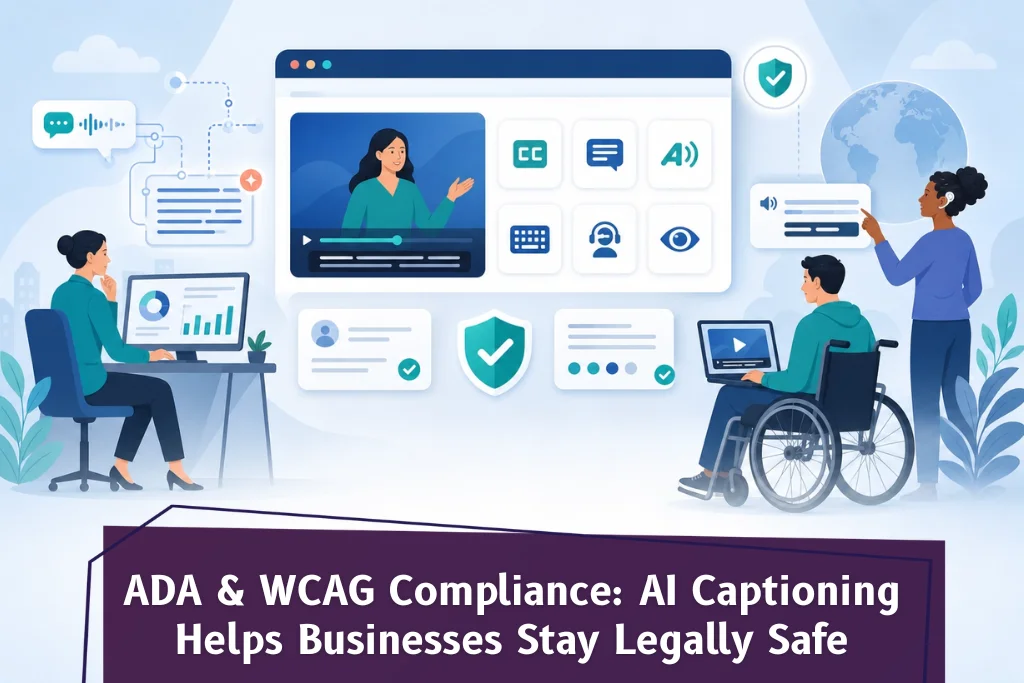
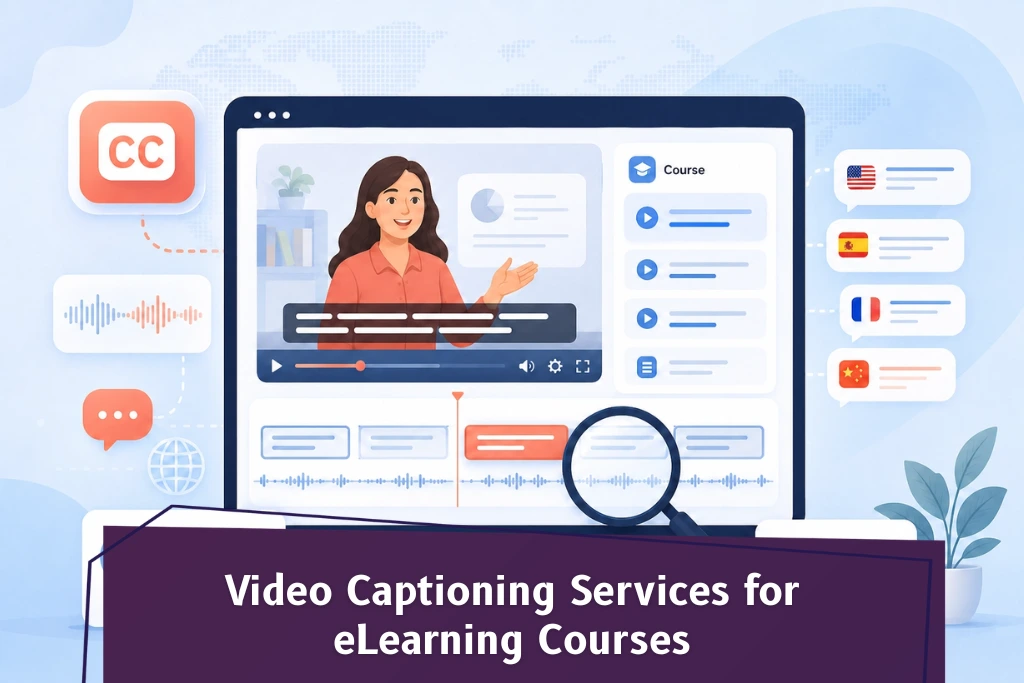
In 2026, professional AI captioning is one of the most critical investments a business can make for its video content strategy. This blog explains how automatic captions, closed captions, and AI-powered subtitle tools help businesses expand their reach to a global audience, improve SEO performance, meet accessibility compliance standards, and keep viewers engaged across platforms like YouTube, Instagram, and beyond. Whether you are a solo content creator, a fast-scaling brand, or an enterprise publishing product demos and training modules, the case for AI captioning has never been clearer. What Is an Auto Subtitle Generator and Why Does It Matter? An auto subtitle generator uses advanced speech recognition technology to listen to the audio track of a video file or audio file and automatically produce synchronized text on screen. Unlike manual captioning, these AI-powered tools can automatically generate subtitles for longer videos in minutes — without downloading software or juggling multiple video editing tools. Today’s speech recognition software is sophisticated enough to handle multiple speakers, accents, background sound effects, and layered dialogue with remarkable precision. As businesses continue to produce as many videos as their pipelines demand — from webinars and e-learning to social media videos and product demos — the ability to upload your video and receive a perfectly synced SRT file or hardcoded subtitles at all skill levels is no longer a luxury. It is a business standard. Automatic Captions Are Reshaping Business Video Strategy Video captions are no longer just an accessibility feature — they are a core pillar of effective video marketing. A significant share of viewers watch video on mobile devices with the sound off. Without auto captions, you silently lose those viewers before they engage with a single word of your message. Automatic captions keep viewers engaged in silent environments — on a commute, in an open office, or in a noisy café. They give non-native speakers and global learners the context they need to follow complex dialogue without replaying the footage. They make video content accessible to the deaf and hard-of-hearing. And because search engines can index caption text, adding captions directly boosts discoverability on YouTube and across the web. Every business that publishes video without captions is leaving reach, retention, and revenue on the table. Auto Generate Subtitles for a Global Audience in Multiple Languages One of the most powerful capabilities of modern AI captioning is the ability to auto generate subtitles in multiple languages. Instead of manually translating and timing auto subtitles for each market, AI platforms produce translated subtitles automatically — so a single video file can instantly speak to audiences in Spanish, German, Mandarin, or dozens of other languages with accurate sync to the audio. A subtitle generator that supports multilingual output allows businesses to generate subtitles at global scale without multiplying production budgets. An e-commerce brand can add subtitles to a product walkthrough and translate it for three markets in the same session. An EdTech platform can generate captions for course videos and make content accessible to global learners everywhere. The shift to automated workflows means teams can auto generate captions for as many videos as needed — consistently, without bottlenecks. Closed Captions: Accessibility, Compliance, and Measurable Business Growth Closed captions are distinct from open or hardcoded subtitles because viewers can toggle them on and off. Their importance to businesses, however, goes far beyond convenience. In many regions, accessible videos with closed captions are a legal requirement for public-facing content in education, healthcare, and government. Failing to create captions that meet accessibility standards can expose organizations to meaningful compliance risk. Beyond regulation, audio descriptions and captions together make video genuinely inclusive — for the deaf and hard-of-hearing, for non-native speakers, and for anyone watching without sound. Accessible videos consistently outperform uncaptioned content in engagement metrics. Incorporating closed captions is not just an ethical responsibility; it is a proven growth strategy that brings more viewers into your content ecosystem. Why Accurate Captions Drive SEO, Retention, and Brand Credibility The quality of your captions matters as much as having them. Inaccurate captions — filled with misheard words and broken timing — frustrate viewers, damage brand credibility, and can actually hurt SEO when search engines index garbled text. Accurate captions, by contrast, reinforce your message, signal professionalism, and make it easier for non-native speakers to follow your dialogue without confusion. Professional AI captioning platforms outperform basic free tools by applying contextual machine learning, custom glossaries, and quality review passes. For businesses running webinars, product demos, or training content at scale, this accuracy level translates directly into higher viewer satisfaction, better watch-through rates, and stronger organic search performance. The link between caption quality and video performance is measurable — and too significant to ignore. Add Subtitles in a Few Clicks with a Full Suite of AI-Powered Tools The modern approach to captioning is built for speed, simplicity, and zero technical friction. You upload your video or link your footage, and a full suite of AI captioning and subtitle tools takes over — transcribing, syncing, formatting, and offering translation in one streamlined editor. From the left menu, you can select fonts, templates, and other visual elements to give your captions a personal touch that fits your brand. Whether you need to add subtitles to a YouTube video, an Instagram video, or a long-form training file, these platforms deliver results in a few clicks — no coding, no specialist skills required. Once finished editing, you can download your video with hardcoded subtitles embedded, export an SRT file for upload, or distribute translated subtitles for multilingual markets. Auto Captions with Animated Effects — Auto Generate Captions That Convert Modern AI captioning platforms go far beyond plain white text. Teams can auto generate captions with animated effects, dynamic word highlighting, custom color schemes, and branded positioning that make video captions feel like a designed visual element — not an afterthought. For social media videos where attention is scarce and competition is fierce, this distinction drives real retention gains. The ability to auto captions with style — adding animated effects that pop on an Instagram video, or a karaoke-style highlight that keeps viewers engaged through longer videos — means every content creator can produce polished, on-brand subtitles without a dedicated design resource. These features keep more viewers watching longer, improving platform algorithms and

MTPE
Blogs

MTPE vs. Full Human Translation: Which is Right for Your Business?

When deciding between Machine Translation Post-Editing (MTPE) and full human translation, the right choice depends on your content type, budget, turnaround time, and quality requirements. MTPE uses a machine translation engine to produce an initial draft, which human editors then refine for accuracy and fluency — making it faster and more cost-effective for high-volume projects. Full human translation, on the other hand, relies entirely on professional human translators who work from the source language to produce the final translation without machine assistance, making it the preferred choice for sensitive, creative, or legally binding content. This blog breaks down both approaches so you can make an informed decision for your business. What Is Machine Translation Post-Editing (MTPE)? Machine translation post-editing, commonly referred to as MTPE or translation post editing mtpe, is a two-step process in the translation industry. First, a machine translation engine — such as a neural machine translation (NMT) system — generates a raw machine translation output. Human editors then review and refine this machine translated text to meet the required quality standards. Post editing machine translation can be classified into two levels: Light Post Editing: Light post editing focuses on making the machine translated content grammatically correct and understandable. Light post editing does not aim for stylistic perfection — it simply aims to correct critical errors like grammatical errors and spelling mistakes. Full Post Editing: Full post editing involves a thorough review of the machine translated output. Post editors correct inconsistent terminology, improve fluency, adapt idiomatic expressions, and ensure the translated output aligns with the brand voice and target audience expectations. MTPE fits seamlessly into modern translation management systems and leverages translation memory to reduce post editing effort on repetitive content, making it a highly scalable option for businesses dealing with multiple languages. What Is Full Human Translation? Full human translation — also referred to as fully human translation or traditional translation — is a process where professional human translators handle the entire process from start to finish without relying on any machine translation tool. The translator reads the source language content and produces a final translation that is accurate, culturally appropriate, and aligned with the client’s intent. Professional human translators bring nuanced understanding of cultural nuances, idiomatic expressions, and context-specific language that machine translation systems still struggle to replicate reliably. For content such as legal documents, literary works, or high-stakes marketing copy, human expertise remains the gold standard. Human translation typically involves multiple quality assurance layers — including human review by a second professional linguist and oversight from project managers — ensuring consistent quality throughout the translation process. When Does Machine Translation Post-Editing Work Best? MTPE machine translation is ideal for businesses that need to translate large volumes of content quickly and within a controlled budget. Here are situations where post editing machine translation delivers exceptional value: High-volume, repetitive content: Product descriptions, user manuals, technical documentation, and e-commerce listings are perfect candidates for MTPE, as translation memory matches significantly reduce post editing effort over time. Speed-driven workflows: When time-to-market is critical, machine translation post editing enables businesses to deliver multilingual content in a fraction of the time taken by traditional translation. Cost-sensitive projects: MTPE translation cost per word is considerably lower, making it a smart choice for organisations with large translation efforts and tight budgets. Internal or low-visibility content: Content not intended for public-facing use — such as internal reports or raw data files — can benefit from light post editing without requiring the full investment of human translation. However, machine generated translations may still carry residual errors around cultural nuances, inconsistent terminology, or idiomatic expressions if post editing is not thorough. This is why human input during the post editing process remains essential for achieving acceptable quality. When Should You Choose Human Translators? Fully human translation continues to hold irreplaceable value for specific use cases. Consider choosing human translators for: Legal documents and compliance content: Legal terminology demands precision that machine translation post cannot guarantee. A single error in a legal document can have serious consequences. Creative and marketing content: Brand campaigns, slogans, and storytelling content rely heavily on cultural nuances and idiomatic expressions that human experts handle with far greater finesse than any machine translation engine. High-stakes public communications: Annual reports, press releases, or healthcare patient communications where translation quality is non-negotiable require the consistent quality that only human expertise can provide. Rare language pairs: For language combinations where machine translation systems lack sufficient training data, professional human translators deliver far more accurate translation results. That said, fully human translation comes at a higher cost and longer turnaround time — factors that can be limiting for businesses with ongoing, high-volume translation needs across multiple languages. MTPE vs. Full Human Translation: A Quick Comparison Factor MTPE Full Human Translation Speed Fast – ideal for large volumes Slower – more time intensive Cost Lower cost per word Higher cost per word Accuracy High (with post editing) Very high Best For Repetitive, high-volume content Legal, literary, sensitive content Cultural Nuances Moderate – needs human review Excellent – handled natively Scalability Highly scalable Limited by human capacity Brand Voice Requires careful editing Preserved naturally Which Is Right for Your Business? Human Post Editing vs. Full Human Translation The answer depends on your specific content type, timeline, and quality expectations. Many modern businesses are adopting a hybrid approach — using machine translation for the initial translation pass and relying on human post editing for quality assurance. This approach combines the speed and cost-efficiency of machine translation with the accuracy and cultural sensitivity of human editors. If your business handles large volumes of technical, informational, or repetitive content across multiple languages, MTPE is a powerful and scalable solution. On the other hand, if you are translating legal documents, creative campaigns, or patient-facing healthcare content where brand voice and cultural nuances are paramount, full human translation is worth the investment. The key is not to treat these as mutually exclusive — a smart translation strategy often uses both, routing different content types to the most appropriate method for continuous improvement in

medical translation
Blogs

How Generative AI Transforms Medical Translation in 2026

In 2026, generative AI is fundamentally changing how medical translation services operate — enabling healthcare providers to translate medical documents faster, support qualified medical interpreters with context-aware language suggestions, and help healthcare organizations overcome language barriers that have long compromised patient safety. This blog explores what that shift looks like in practice, why the human element in medical interpretation remains indispensable, and how language services providers are rising to meet the growing demand for accurate, secure, and scalable healthcare communication. Why Language Barriers in Healthcare Remain a Critical Challenge Language barriers in healthcare are not a new problem, but their consequences are just as serious today as they have ever been. When a patient who speaks a different language cannot clearly describe symptoms, or when a family member is pressed into interpreting a complex treatment plan, communication breaks down — and patient safety is put at risk. The numbers tell a clear story. Hundreds of millions of people worldwide seek healthcare in a language other than their native one. In the US alone, Spanish is the most requested language for interpretation in clinical settings, but healthcare workers routinely encounter patients speaking Arabic, Mandarin, Tagalog, Portuguese, and dozens of other languages. In Europe, migration patterns have created similar multilingual realities across healthcare systems that were historically built around one language. Overcoming language barriers is not just a matter of courtesy — it is a clinical necessity. Miscommunicated diagnoses, misunderstood medication instructions, and uninformed consent are all downstream consequences of unaddressed communication barriers. For healthcare providers, ensuring patient safety means building language access into the care delivery process itself, not treating it as an afterthought. Medical Translation Services in 2026: Beyond Machine Translation For years, machine translation was viewed with skepticism in medical settings — and for good reason. Early systems struggled with specialized terminology, failed to preserve clinical nuance, and produced errors that could mislead rather than inform. In 2026, that has changed substantially. Generative AI trained on large volumes of clinical and medical content can now handle complex medical terminology with significantly greater accuracy, differentiate contextual meanings (the word “depression” means something very different in psychiatry than in cardiology), and maintain consistency across long documents. Healthcare organizations are seeing real gains in turnaround time for translated medical documents, with workflows that once took days now completing in hours. The shift has been particularly impactful for healthcare organizations managing content at scale — translating patient-facing materials, updating clinical guidelines, and maintaining informed consent documents across multiple target languages simultaneously. Generative AI makes this operationally feasible in ways it simply was not before. That said, medical translation services in 2026 are not purely automated. For critical documents — particularly those involved in clinical trials, regulatory submissions, or legal compliance — a certified medical translator reviewing and approving AI output remains standard practice. The result is a hybrid model that combines speed with the accuracy that high-stakes medical communication demands. The Medical Interpreter and Medical Interpretation: A Human Skill AI Enhances A medical interpreter does far more than convert words from one language to another. Skilled medical interpretation involves conveying tone, urgency, emotional nuance, and cultural context — the full weight of a conversation between a patient and a healthcare provider. A qualified medical interpreter working in oncology, for example, must navigate not just terminology but deeply sensitive discussions about prognosis, treatment options, and quality of life. Generative AI has not replaced this human expertise — and in high-stakes settings, it should not. What it has done is extend the reach of medical interpretation to situations where a qualified interpreter cannot be physically present. Real-time AI-assisted communication has made language access possible in emergency settings, rural clinics, and specialist consultations where previously a patient and provider might have struggled to communicate at all. The most responsible healthcare organizations treat this as an expansion of capacity, not a shortcut. Certified interpreters remain the standard for mental health assessments, surgical consent, palliative care, and any encounter where the emotional and clinical stakes are highest. AI extends language access; experienced, certified interpreters deliver it at its most critical. Translating Medical Documents: From Clinical Trials to Consent Forms Medical documents represent one of the most demanding translation challenges in any sector. The stakes of a terminology error in a clinical trials protocol, a prescribing guide, or a patient consent form extend well beyond the document itself — inaccurate translation can directly affect patient outcomes and create serious regulatory compliance exposure for healthcare organizations. Generative AI has made it possible to accelerate the translation of these documents while maintaining quality through human review at key stages. This model — often called machine translation post-editing — allows a medical translator to work with a high-quality draft rather than starting from scratch, significantly reducing turnaround time without compromising accuracy. For healthcare organizations managing content across dozens of target languages, this scalability is transformative. Maintaining aligned, up-to-date translations of core documents across a global operation used to be a resource-intensive challenge. In 2026, it is increasingly manageable — provided that the underlying language services infrastructure is built for medical content specifically, not repurposed from general-purpose translation tools. Language Services, Data Security, and GDPR Compliant Workflows Any discussion of medical translation services must address data security directly. Patient medical records, clinical histories, and research data are among the most sensitive categories of personal information that exist. Healthcare providers using language services carry a responsibility to ensure that their translation workflows handle this data with the same rigor as their clinical systems. In 2026, GDPR compliant data handling is a baseline requirement for any language services provider operating in or with European healthcare organizations — and HIPAA compliance applies across US-based healthcare contexts. This means end-to-end encryption, strict access controls, documented data retention policies, and full accountability for how patient data flows through the translation process. Healthcare organizations should evaluate any language services partner on data security as rigorously as they evaluate translation quality. The two are inseparable in a healthcare context. Providers that

ai translation
Blogs

AI Translation in 2026: How to Choose the Right Service Provider for Your Business

AI translation is no longer just a tech trend — it’s a business necessity. In 2026, companies expanding into new markets need fast, accurate, and scalable AI translation solutions to break language barriers and reach customers worldwide. This blog explains how AI translation works, when you still need human expertise, what features to look for in a service provider, and how to choose the right partner. If you’re looking for high-quality translations that protect your brand voice while supporting global growth, this guide will help you make the right decision — and show how Nambix Technologies supports businesses with reliable, AI-powered translation services. What Is AI Translation and Why Does It Matter? AI translation uses artificial intelligence and large language models to automatically translate text, audio, or documents from one language to another. An AI language translator can process thousands of words in seconds, helping businesses communicate in a foreign language without long turnaround times. In 2026, AI-powered translation is a game changer for companies that: Sell products internationally Manage multilingual websites Provide customer support in different languages Translate contracts, manuals, and reports Offer e-learning or video content However, not all AI translation services are the same. Choosing the right AI translator service provider is crucial to ensure high accuracy, proper grammar, and consistent meaning across your translated documents. AI Translation vs Human Translation: What’s the Difference? Understanding the difference between machine translation, automatic translation, and human translation is essential. Machine translation / automatic translation: Uses AI tools to instantly translate source text into a target language. Human translation: Performed by a professional human translator who understands cultural context, tone, and brand voice. AI is fast and cost-effective. Human translators provide deeper accuracy, especially for legal, marketing, and technical content. The smartest businesses in 2026 don’t choose one over the other — they combine both. At Nambix Technologies, we use AI-powered workflows for speed and scalability, followed by expert human review when needed. This hybrid approach ensures high-quality translations without delays. How Many Languages Should Your AI Translator Support? One of the first questions businesses ask is: How many languages does the platform support? A strong AI translation provider should support: Major global languages like Spanish, French, German, Portuguese, Italian, Chinese, Japanese, Korean, Arabic, and Russian Regional and emerging markets such as Vietnamese, Turkish, Finnish, Greek, Dutch, Swedish, and more Different language variants (for example, simplified vs traditional Chinese) It’s not just about how many supported languages exist — it’s about whether the provider supports the exact language pairs your business needs. Nambix works with multiple languages and custom language pairs, helping companies expand confidently into new markets without worrying about communication gaps. Real Time Translation: Do You Really Need It? In 2026, many businesses require real time translation for: Live meetings Webinars Customer support chats International sales calls Modern AI translators can detect language instantly, translate speech or text in real time, and help teams communicate globally. However, real-time translation must still be accurate. Poor translations can damage credibility. Nambix Technologies ensures AI-powered real-time tools are optimized and monitored to maintain clarity and meaning. Document Translation: Keeping Original Formatting Intact One common frustration with free AI tools is losing original formatting during document translation. Businesses often translate: Contracts Presentations Product manuals Research papers Website content If formatting breaks, teams waste hours fixing layout issues. A professional translation platform should preserve: Fonts and layout Tables and graphics Page structure File types like Word, PDF, PowerPoint, and more Nambix Technologies provides document translation services that maintain original formatting while ensuring translation quality. This saves time and keeps your files presentation-ready. Why Translation Memory Is Important If your company frequently translates similar content, you need translation memory. Translation memory stores previously translated content so it can be reused. This ensures: Consistency across multiple languages Faster turnaround Reduced cost over time Stronger brand voice alignment For example, if your website uses a specific word repeatedly, translation memory ensures it’s translated consistently in Spanish, French, German, and other languages. Nambix Technologies integrates translation memory into its workflows, helping businesses maintain accuracy and consistency across all translated documents. Free AI Translator vs Professional AI Translation Services A free AI translator may work for quick checks or casual use. But businesses face bigger risks: No data security guarantees Limited supported languages No human review No translation memory Formatting errors No SLA or quality control When your brand reputation is at stake, relying on free tools can be risky. Nambix Technologies provides secure, AI-powered translation solutions with professional oversight, ensuring your data stays protected and your translations remain accurate. Key Features to Look for in an AI Translation Service Provider Look for a provider that supports diverse file types while preserving original formatting, ensuring documents are delivered ready to use. Pricing should be transparent — whether based on words or characters — to allow accurate budget forecasting. Quality assurance must include human review alongside AI to maintain accuracy, grammar, and brand consistency. The provider should also support the required language pairs and scale easily as your global operations grow. Finally, strong data security and compliance standards are non-negotiable. An effective AI translation service provider combines advanced technology, structured quality control, scalability, and enterprise-grade security to deliver dependable, business-ready outcomes. Nambix Technologies helps businesses localize websites efficiently while maintaining clarity and accuracy across different language markets. AI Dubbing and Multilingual Content Beyond text, businesses now need AI dubbing and multilingual media support. AI can translate scripts and generate voiceovers in other languages quickly. Nambix Technologies combines AI translation with multimedia localization services, helping brands create content that resonates globally. Why Businesses Choose Nambix Technology In 2026, businesses don’t just need a tool — they need a reliable translation partner. Nambix Technologies offers: AI-powered translation platform Human translation and review services Translation memory integration Support for multiple languages and language pairs Real-time translation capabilities Secure data handling Formatting-preserving document translation Scalable workflows We focus on delivering high accuracy while helping companies overcome language barriers efficiently. Frequently Asked Questions (FAQs) 1. Is AI translation accurate enough for business use? AI translation has improved significantly and can deliver high accuracy for many types

Scroll to Top